
Loading...
Serving Woodward, OK and surrounding areas. (580) 290-2465
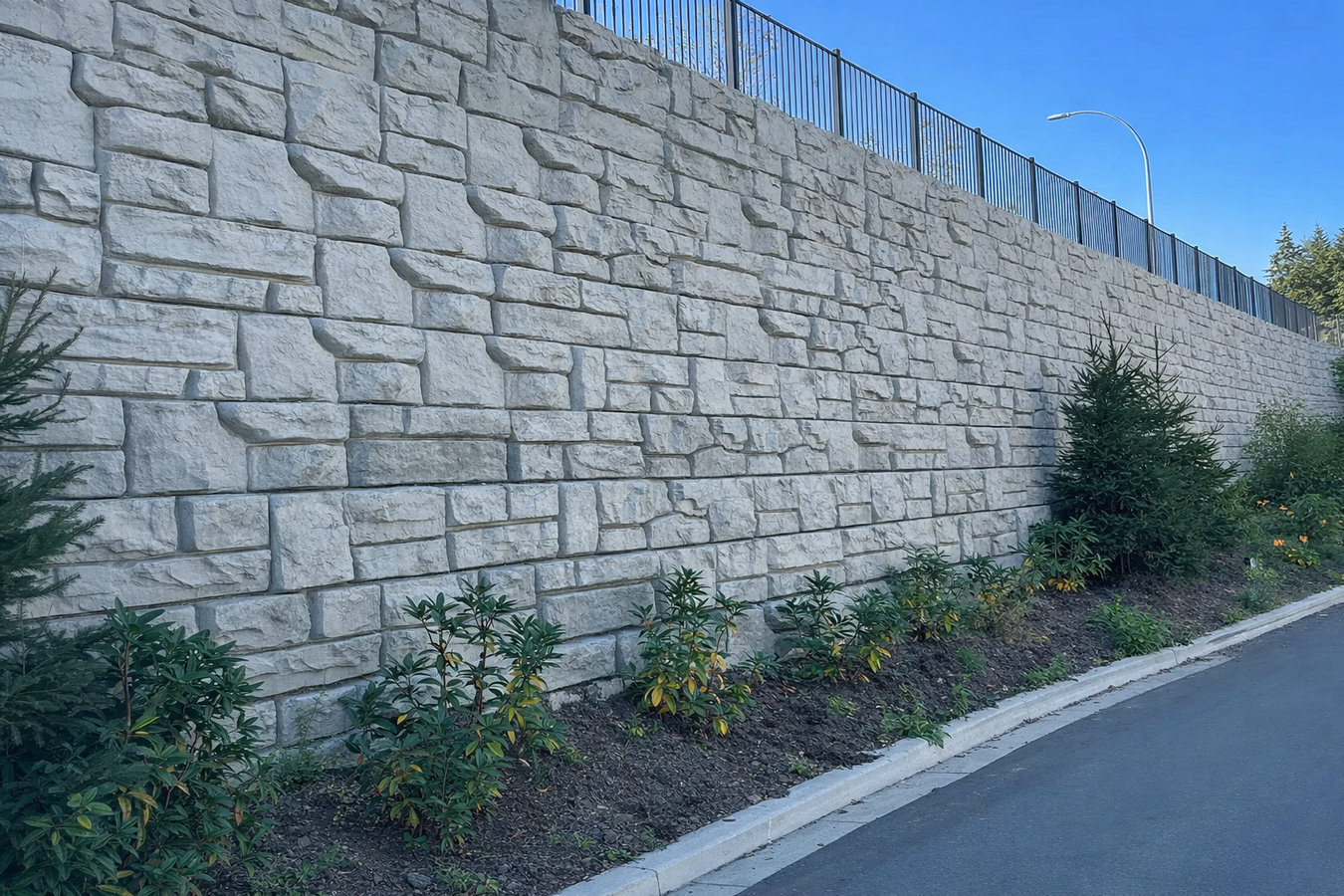
Woodward slopes lose ground every spring storm season. A properly built concrete retaining wall stops that - with the right drainage and footing for Oklahoma clay soil, so the wall stays straight and solid for decades.
Concrete retaining walls in Woodward, OK hold back soil on slopes that would otherwise erode or shift - most residential jobs take two to five days on site, starting with footing excavation and finishing with drainage installation and backfill.
Northwest Oklahoma homes deal with slopes that lose soil every spring. Woodward sits on clay-heavy ground that swells when wet and shrinks when dry - and that cycle puts constant pressure on any structure built to hold it back. A retaining wall that works here is not just a wall; it is a footing dug below the active soil layer, a wall sized for the actual load, and drainage installed behind it so water never builds pressure against the concrete.
If the slope issue is near your home and you suspect water is also affecting the base, our concrete floor installation service addresses interior slab work that often goes hand in hand with retaining and drainage projects.
After a heavy spring storm, walk your yard and look at any sloped areas. If you see soil moving toward your driveway, sidewalk, or foundation, or small gullies forming in a hillside, erosion is actively happening. Northwest Oklahoma's spring storm season - roughly March through June - makes this worse every year without intervention.
If a section of your yard looks like it is slowly moving downhill - grass pulling away from a higher section, or a visible step where the ground used to be flat - the soil is shifting. This is especially common in Woodward's clay-heavy soil, which moves significantly during wet springs followed by dry summers.
If your current wall - timber, block, or poured concrete - is leaning forward, cracking horizontally, or bulging at the middle, it is carrying more pressure than it can handle. This is a safety issue, not just a cosmetic one. A wall visibly failing needs assessment and likely replacement before it collapses.
If rainwater consistently runs toward your house and sits against the foundation, a slope or grade problem is often the cause. Over time, that standing water can work its way into a foundation and cause serious damage. A retaining wall, combined with proper grading, redirects water away from your home.
We build both poured concrete and concrete block retaining walls, and we handle everything from the initial estimate through the final walkthrough. Every project starts with a look at your slope, soil, and drainage situation before we quote anything. We pull permits from the City of Woodward when required - walls over a certain height need one, and we handle that process so you do not have to. If your project requires an engineer's design, we can walk you through what that involves and connect you with the right resource. For homeowners also dealing with erosion around a patio or outdoor space, our concrete footings service addresses the underground anchoring that supports walls, posts, and structures on challenging terrain.
Drainage behind the wall is not optional - it is part of every wall we build. We install gravel and perforated drain pipe so water that saturates the soil has somewhere to go other than building pressure against the face of your wall. The Federal Highway Administration identifies drainage as the primary factor in retaining wall performance and longevity - it is the step most often skipped on cheaper jobs, and the reason those walls fail.
Best for taller walls and applications needing maximum strength - liquid concrete placed into forms and left to harden into a solid structure.
Popular for shorter garden-level projects where appearance matters - individual units stacked and interlocked for durability.
Standard on every project we build - gravel backfill and perforated drain pipe behind the wall keep water pressure from building up.
For homeowners who want to turn an unusable hillside into a flat area for a garden, patio, or outdoor space - the wall creates the level surface.
Woodward is in the heart of the Southern Plains, where sustained winds are a fact of life. That wind accelerates soil erosion on exposed slopes faster than in calmer climates - meaning a yard without a retaining wall can lose ground between storm seasons in ways that are not obvious until the damage is already significant. The clay soil that covers most of northwest Oklahoma adds another layer: it swells in wet spring conditions and shrinks in dry summers, creating movement that slowly destabilizes any slope that is not anchored. Homeowners in Fort Supply and Vici face the same soil and wind conditions as Woodward - we work across the region and understand what each area requires.
Timing matters here too. Northwest Oklahoma's spring storm season - roughly March through June - brings heavy rainfall that can strip soil from an unprotected slope in a single afternoon. Late summer and fall, when the ground is drier and contractors are often more available, is the ideal window to plan and build. Walls built in the fall are fully cured and settled before the next wet season arrives - and they are ready to do their job when the spring storms show up. The International Code Council sets the structural standards that properly permitted retaining walls must meet - and those standards exist because an under-built wall is a safety risk, not just an aesthetic one.
We ask a few basic questions - where the wall is going, how tall it needs to be, whether an old wall needs to come out. You do not need all the answers; just describe what you are seeing. We respond within 1 business day.
We come to your property, look at the slope, soil, and drainage, and take measurements. This visit usually takes 30 to 60 minutes. You get a written estimate shortly after - and this is your chance to ask questions.
If the City of Woodward requires a permit for your wall - common for walls over a certain height - we handle pulling it before any work begins. That step can add a week or two to the timeline, but it protects you legally and ensures the work is inspected.
We excavate the footing, build the wall, install drainage material behind it, and backfill in layers. After the pour, we walk the finished wall with you and explain any first-year care before we leave the site.
No pressure, no obligation. We come to your property, look at the slope and soil, and give you a clear written quote before any work begins.
(580) 290-2465We hold the state contractor license required under the Oklahoma Construction Industries Board. You can verify it at cib.ok.gov before you hire us. That license protects you if anything goes wrong on your property.
Northwest Oklahoma's clay soil and persistent south winds create conditions that destroy retaining walls built without local knowledge. We size footings, select mixes, and install drainage specifically for how soil here actually behaves - not just how soil behaves on average.
You receive an itemized written quote covering excavation, wall construction, drainage, and backfill before we ever break ground. If something unexpected comes up, we tell you about it before we do additional work - never after.
Water pressure is the number-one reason retaining walls fail early. We install gravel and drainage pipe behind every wall so water moves through and away rather than building pressure against the concrete. Contractors who skip this step are the ones you call back in three years.
Every one of these proof points comes back to the same thing: we do the work the right way because cutting corners on a retaining wall shows up fast - and it is expensive to fix. When you call us, you are getting a contractor who knows what Woodward soil does and builds accordingly.
Level, durable interior floors built to handle Woodward's shifting clay base - from basement upgrades to storm shelter slabs.
Learn MoreDeep footings that anchor walls, posts, and structures into stable ground below Woodward's active clay layer.
Learn MoreFall is the best time to build in Woodward - get on the schedule now and your wall will be cured and ready before spring rains return.